
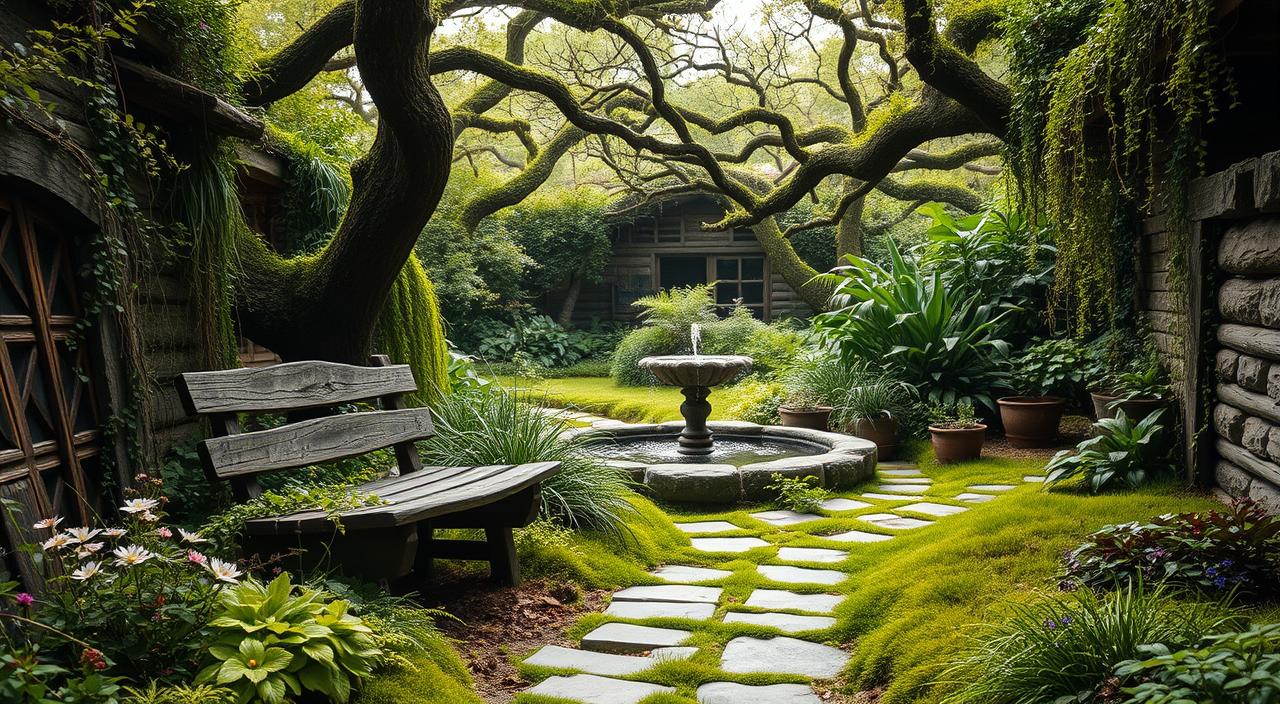
Turning your outdoor area into a cozy rustic garden design is simpler than you might think. Use natural materials like wood, stone, and plants. This way, you can make a special and eco-friendly haven.
Sustainable gardening is good for the planet and makes your garden more interesting. This guide will show you how to pick the best materials, plan your garden, and add special touches that show off your style.
By the end of this guide, you’ll know how to make a stunning and green garden. It will be a place that shows off your creativity.
Understanding the Rustic Garden Aesthetic
To create a rustic garden, you must first understand the aesthetic that emphasizes natural beauty and simplicity. The rustic garden aesthetic is all about embracing the beauty of natural materials and the imperfections that come with them.
Key Elements of Rustic Garden Design
The key to a rustic garden design lies in its ability to incorporate natural elements effectively. Two crucial aspects of this design are weathered textures and organic shapes.
Weathered Textures and Patinas
Weathered textures and patinas add depth and character to your garden. These elements give your garden a sense of age and history, making it feel more established and authentic.
Organic Shapes and Forms
Organic shapes and forms create a sense of harmony with nature. Using natural materials in their organic forms helps to blur the line between the garden and the surrounding landscape.
Benefits of Using Natural Materials
Using natural materials in your rustic garden not only enhances its aesthetic appeal but also provides several benefits.
Environmental Sustainability
- Reduces the carbon footprint associated with processing and transporting materials.
- Promotes the use of locally sourced and sustainable materials.
Connection to Nature
A garden made from natural materials fosters a deeper connection to the natural world. It creates a sense of being part of the landscape rather than being separate from it.
Planning Your Rustic Garden Space
To make a rustic garden that shows your style, you must plan well. You need to know your garden’s unique features and how to use them wisely.
Assessing Your Garden Area
First, check out your garden space. Look at the sunlight and shade, and test your soil.
Sunlight and Shade Analysis
Watch your garden during the day to see where the sun hits and where it’s shady. This helps you place plants and paths right. Knowing sunlight is key for picking the best plants.
Soil Quality Evaluation
Test your soil to find out its type and what nutrients it has. This helps pick the right plants and if you need to change the soil. Good soil is essential for a healthy garden.
Creating a Cohesive Design Plan
After checking your garden, make a design plan. Sketch out a layout and divide areas for different uses.
Sketching Your Layout
Begin by drawing a basic garden layout. Include existing features and areas for different activities. This lets you see your design and make changes.
Zoning Different Areas
Split your garden into zones, like a seating area, veggie garden, or flower bed. This makes your garden both useful and lovely.
Budgeting for Natural Materials
When planning your rustic garden, think about the cost of materials like wood, stone, and plants. Look for ways to save, like using old materials or buying during sales.
Cost-Saving Strategies
Save money by using reclaimed wood, buying materials when they’re cheaper, or using what you already have. Being smart can keep your budget in check.
Prioritizing Key Elements
Decide what’s most important in your design and spend your budget on those things. This way, you can create a beautiful rustic garden without overspending.
Essential Natural Materials for Rustic Gardens
A rustic garden is all about natural materials. They add warmth and character to your outdoor space. Choosing the right materials is key to creating a welcoming atmosphere.
Types of Wood for Garden Projects
Wood is a key element in rustic garden design. It’s used for fences, furniture, and more.
Cedar and Redwood Options
Cedar and redwood are great for garden projects. They resist rot and insects well. Cedar has a unique smell and color, while redwood is durable and reddish.
Reclaimed Timber Sources
Using reclaimed timber makes your garden unique. It comes from old barns, fencing, or pallets. This adds history to your garden.
Stone and Rock Options
Stone and rock are great for pathways, borders, and decorations.
Fieldstone and Flagstone
Fieldstone and flagstone are perfect for natural paths and patios. Fieldstone is irregular and suits informal designs. Flagstone is flat and great for walkways.
River Rock and Pebbles
River rock and pebbles make for beautiful ground cover or accents. They come in different sizes and colors, offering creative options.
Natural Fibers and Textiles
Natural fibers add texture and warmth to your garden.
Jute and Sisal Applications
Jute and sisal are durable and eco-friendly. They’re used for borders, planters, or decorations. They’re biodegradable and fit well with nature.
Reclaimed and Repurposed Materials
Using reclaimed and repurposed materials is good for the environment. It also adds a unique touch to your garden.
Finding and Preparing Found Objects
You can find materials at salvage yards, thrift stores, or in your backyard. Cleaning and repurposing them adds a personal touch to your garden.
How to Create a Rustic Garden Using Natural Materials: Step-by-Step Approach
To create a rustic garden, follow this guide. It’s more than picking materials. It’s about making a space that feels welcoming and real.
Establishing Your Garden’s Foundational Elements
The first step is to set up your garden’s basics. Start by clearing and getting ready the space.
Clearing and Preparing the Space
Begin by removing debris, weeds, or features that don’t fit your vision. Clearing the area thoroughly gives you a blank canvas. Then, check the soil and make changes to support your plants.
Installing Hardscape Basics
Now, install the hardscape basics. This includes pathways, patios, and other hard features. Choose materials that match the natural look, like stone, gravel, or reclaimed wood.
Incorporating Focal Points
Focal points are key in a rustic garden. They draw the eye and add interest. Think about using natural sculptures or vintage farm equipment.
Natural Material Sculptures
Make sculptures from wood, stone, or clay. These can be abstract or representational, based on your taste.
Vintage Farm Equipment Displays
Vintage farm equipment adds a charming, nostalgic feel. Arrange these pieces to create a beautiful display.
Balancing Different Materials
One challenge is balancing different materials. The goal is to achieve visual harmony.
Creating Visual Harmony
To achieve harmony, think about the color and texture of your materials. Mixing different textures and tones adds depth and interest.
Texture and Color Considerations
Consider how materials interact. For example, stone or wood’s roughness can be balanced by metal’s smoothness. Earthy tones of natural materials can be enhanced by plants’ vibrant colors.
Building Rustic Garden Pathways
The right pathway can make your garden feel like a cozy retreat. It’s not just useful; it also adds charm and character to your outdoor space.
Gravel and Stone Path Techniques
Gravel and stone paths are great for rustic gardens. They look natural and last a long time. You can make simple or fancy paths with these materials.
Dry-Laid Stone Methods
Dry-laid stone paths look natural and are easy to care for. They don’t need mortar, so they’re simple to maintain and let water drain well.
Pebble Mosaic Designs
Pebble mosaics can make your paths look beautiful. By arranging pebbles in patterns, you can create paths that match your garden’s rustic style.
Wooden Walkway Ideas
Wooden walkways add warmth and coziness to your garden. You can use different types of wood, depending on what you like and can afford.
Log Slice Stepping Stones
Log slice stepping stones are charming and good for the environment. They fit well among plants or gravel, making your path inviting.
Reclaimed Timber Boardwalks
Reclaimed timber boardwalks add a rustic feel and help with wet or uneven areas. They’re both beautiful and useful in your garden.
Mixing Materials for Unique Pathways
Using different materials can make your pathways stand out. Mixing stone, wood, and gravel adds depth and character to your garden.
Stone and Wood Combinations
Stone and wood together create a striking look. For example, wooden planks between stone slabs make a path that’s both beautiful and practical.
Integrating Ground Covers
Adding ground covers to your pathways softens the edges and makes them look more natural. Plants like thyme or creeping juniper can make your path lush and inviting.
| Pathway Material | Characteristics | Maintenance |
|---|---|---|
| Gravel | Natural look, good drainage | Periodic raking |
| Stone | Durable, versatile | Weeding, occasional cleaning |
| Wood | Warmth, coziness | Regular sealing, inspection for rot |
Creating Natural Borders and Edging
To make your rustic garden look polished, think about using natural borders and edging. These borders help separate different parts of your garden. They add visual interest and make your design look cohesive.
Log and Branch Borders
Logs and branches are perfect for rustic borders. You can use wattle fencing or stacked log edging.
Wattle Fencing Techniques
Wattle fencing is about weaving branches between stakes. This eco-friendly method adds a unique texture to your garden.
Stacked Log Edging
Stacked log edging uses logs to form a border. It’s great for marking pathways and garden beds.
Stone Edging Techniques
Stone is a great natural material for edging. You can use dry stack stone walls or boulder boundaries.
Dry Stack Stone Walls
Dry stack stone walls don’t use mortar. They rely on stone weight and placement. This adds rugged charm to your garden.
Boulder Boundaries
Large boulders can make a dramatic boundary. This is perfect for big gardens or separating areas.
Living Borders with Plants
Living borders use plants for a dynamic element. You can choose hedgerows, shrub borders, or ornamental grass boundaries.
Hedgerows and Shrub Borders
Hedgerows and shrub borders create lush, green boundaries. They also help wildlife and can block unwanted views.
Ornamental Grass Boundaries
Ornamental grasses make soft, flowing borders. They add movement and texture to your garden.
DIY Rustic Garden Furniture and Structures
You can make your garden look better by creating your own furniture and structures. This adds charm and function to your outdoor area.
Building Simple Wooden Benches
Wooden benches are key in rustic garden design. They can be made from logs or reclaimed planks. This creates a cozy spot to sit.
Log Bench Construction
To make a log bench, pick sturdy logs. Choose logs that are at least 6 inches thick for strength. Use dowels or metal brackets to hold them together.
Reclaimed Plank Seating
Reclaimed plank seating looks polished. Use weathered planks to make a bench that fits right into your garden.
Creating Arbors and Trellises
Arbors and trellises bring height to your garden. They can be built from branches, twigs, or weathered wood.
Branch and Twig Structures
For a natural look, build arbors with branches and twigs. Hold them in place with wire or twine.
Weathered Wood Pergolas
Weathered wood pergolas are great for climbing plants. They’re made from reclaimed wood for a rustic feel.
Rustic Tables and Seating Areas
Rustic tables and seating areas make your garden welcoming. They’re perfect for dining and relaxing outside.
Stump Tables and Chairs
Tree stumps can be turned into unique tables and chairs. They bring a natural touch to your garden.
Outdoor Dining Spaces
Set up a rustic dining area with a table and benches. It’s a cozy spot for meals and gatherings.
Natural Material Planters and Containers
Natural planters like hollowed log planters and stone troughs add charm. They fit right into a rustic garden.
Hollowed Log Planters
Hollowed logs are great for small plants or herbs. They make beautiful planters.
Stone Troughs and Basins
Stone troughs and basins are durable and attractive for planting. They can handle different weather.
Selecting Plants for Your Rustic Garden
Choosing the right plants is key to a beautiful rustic garden. The plants you pick can either enhance or detract from the garden’s rustic charm.
Native and Wildflower Options
Native plants and wildflowers are great for rustic gardens. They fit well with the local climate and soil. They also need less care and attract local wildlife, making the garden more beautiful.
Prairie and Meadow Species
Prairie and meadow species like coneflowers and black-eyed susans are perfect. They are tough, look great, and attract pollinators.
Woodland Understory Plants
For shaded spots, use woodland understory plants like ferns and wild ginger. These plants love shade and add depth to your garden.
Herbs and Edibles That Complement Rustic Design
Adding herbs and edibles to your garden is smart. It makes your garden more useful and looks better too.
Heritage Vegetables
Heritage vegetables like heirloom tomatoes and carrots are tasty and nostalgic. They add a special touch to your garden.
Culinary and Medicinal Herbs
Culinary herbs like rosemary and thyme, and medicinal herbs like echinacea, are great. They’re useful and make your garden smell nice.
Trees and Shrubs for Structure
Trees and shrubs give your garden shape and structure. They help create borders, offer shade, and add interest all year.
Crabapples and Fruit Trees
Crabapples and fruit trees are excellent choices. They bloom in spring and produce fruit in fall, making your garden more appealing.
Ornamental Shrubs with Character
Ornamental shrubs like hydrangeas and lilacs add character. They bring beautiful flowers and foliage, enhancing your garden’s rustic charm.
Seasonal Planning for Year-Round Appeal
To keep your garden interesting all year, plan for seasonal changes.
Winter Interest Elements
Add elements for winter interest, like evergreen trees and shrubs with interesting bark or berries.
Spring and Summer Succession
Plan for a succession of plants that bloom in spring and summer. This ensures your garden is always colorful and lively.
| Plant Type | Seasonal Interest | Maintenance Level |
|---|---|---|
| Native Wildflowers | Spring, Summer | Low |
| Heritage Vegetables | Summer, Fall | Medium |
| Ornamental Shrubs | Spring, Summer, Fall | Medium |
Rustic Garden Accents and Decorative Elements
Rustic garden accents and decorative elements can transform a simple outdoor space into a cozy retreat. They not only make your garden look better but also show off your personal style.
Weathered Metal Accents
Weathered metal accents bring rustic charm to your garden. You can use:
- Antique farm tools as decorative pieces or art
- Rusted iron elements that bring a sense of age and character
Antique Farm Tools as Art
Old farm tools can be turned into unique garden decorations. Hang them on a wall or use them as a creative border.
Rusted Iron Elements
Rusted iron adds a beautiful, aged look to your garden. Use rusted iron ornaments or decorative pieces to create a focal point.
Natural Material Ornaments
Ornaments made from natural materials fit well in a rustic garden. Some ideas include:
- Pinecone and seed pod crafts that can be used as decorations
- Driftwood and branch sculptures that add a natural, organic feel
| Accent Type | Description | Example |
|---|---|---|
| Weathered Metal | Adds a rustic, aged look | Antique farm tools, rusted iron ornaments |
| Natural Material | Blends with the garden’s natural aesthetic | Pinecone crafts, driftwood sculptures |
| Handcrafted Art | Unique, personalized decorative elements | Stone cairns, woven willow structures |
Handcrafted Garden Art
Handcrafted garden art is a meaningful way to personalize your garden. Consider creating or purchasing:
- Stone cairns and stacks that add a serene, natural element
- Woven willow structures that provide a unique, organic shape
By adding these rustic garden accents and decorative elements, you can make your outdoor space warm and inviting. It will also reflect your personal style.
Conclusion: Maintaining Your Rustic Garden
Keeping your rustic garden in top shape takes dedication and care for the environment. Start by mulching to keep the soil moist and weeds away. Don’t forget to prune your plants regularly to keep them healthy and looking good.
Dealing with pests and diseases in a natural way is key to rustic garden care. This approach fits well with your garden’s eco-friendly design. By doing this, you’ll enjoy your garden for many years.
Choosing sustainable gardening practices does more than help the planet. It also makes your outdoor space better. With the right care, your rustic garden will be a peaceful place to relax and connect with nature.

Hi there! My name is Clara Martins, I’m from Oregon, and I write this blog with great care during my free time.