
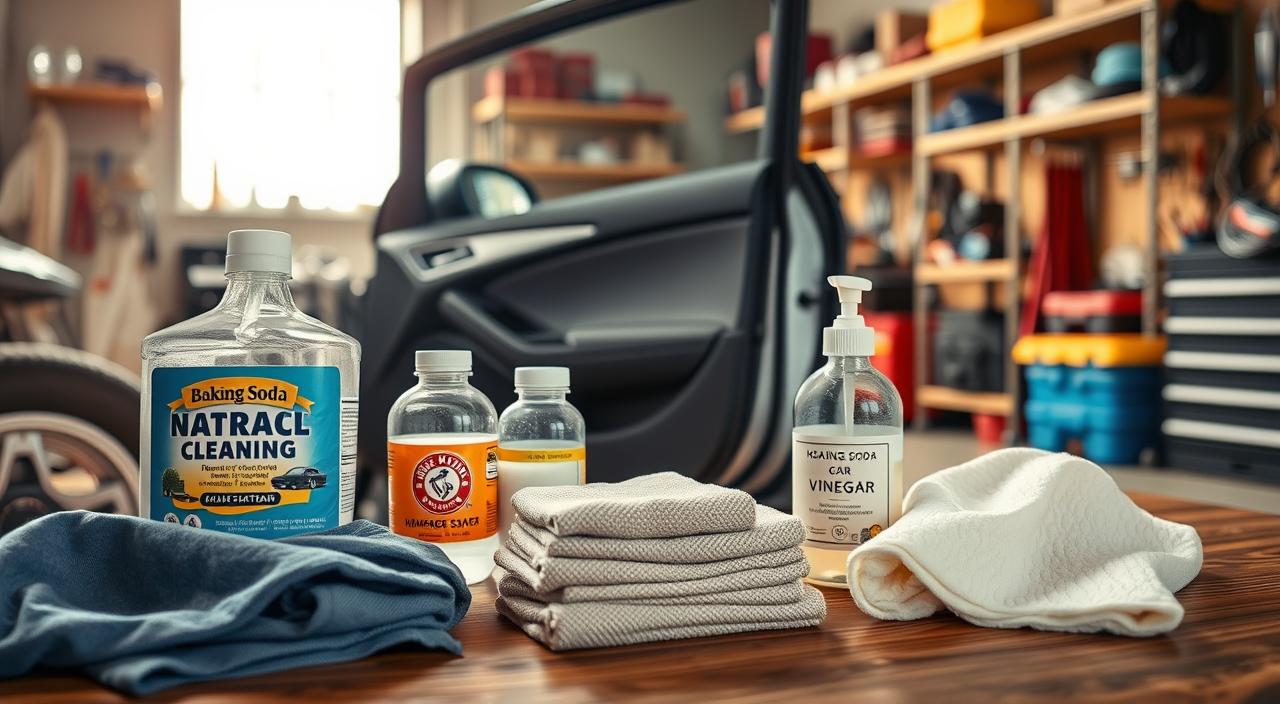
Caring for your car’s interior is more than just making it look good. It’s also about keeping it healthy. Using homemade cleaning products is a smart and green way to keep your car clean.
Many commercial cleaners have harsh chemicals that can harm you and the planet. But, DIY car cleaning with natural stuff like baking soda, vinegar, and lemon juice is safer. These ingredients are gentle on surfaces and the environment.
Choosing car interior care with homemade products keeps your car clean and safe. It’s good for you and the planet too.
The Benefits of Using Homemade Products for Car Interior Cleaning
Homemade car interior cleaners save money and are good for the planet. They help keep your car looking great without hurting your wallet or the environment.
Cost-Effectiveness Compared to Commercial Products
Homemade cleaners are cheaper than store-bought ones. This is especially true if you clean your car often.
Average Savings per Year
DIY cleaning can cut your yearly car cleaning costs by half. Items like baking soda and vinegar are cheap and effective.
Multi-Purpose Nature of Homemade Solutions
Homemade cleaners work on many car surfaces. This makes them even more cost-effective.
Environmental Benefits of Natural Cleaners
Natural cleaners are better for the planet than harsh chemicals. They reduce pollution and are gentler on the environment.
Avoiding Harsh Chemicals on Sensitive Interior Surfaces
Commercial cleaners can harm your car’s interior. Homemade cleaners are safer for surfaces like leather and plastics.
Choosing homemade cleaners saves money and protects the environment. It also keeps your car’s interior in top shape for years.
Essential Ingredients for Homemade Car Interior Cleaners
You can make your car’s interior spotless with homemade cleaners from common items. These items are natural and work well. They keep your car looking good and make it healthier to be in.
Common Household Items That Make Great Cleaners
Many household items can clean your car’s interior well. Here are a few:
- Vinegar: It kills bacteria and gets rid of dirt and grime.
- Baking Soda: It’s a soft scrubber and absorbs smells.
- Dish Soap: It’s good for tough stains and grime when mixed right.
Vinegar, Baking Soda, and Dish Soap
These three are key in homemade cleaners. Vinegar cleans surfaces and gets rid of smells. Baking soda scrubs off tough stains. Dish soap mixes with dirt and grime.
Essential Oils for Fragrance and Cleaning Power
Essential oils make your cleaners smell nice. They also have antibacterial properties. This makes your cleaners work better.
Natural Ingredients That Are Safe for Various Interior Surfaces
It’s important to pick ingredients safe for your car’s interior. This includes fabric, leather, vinyl, and glass. Olive oil and lemon juice are gentle and work well on many surfaces.
Basic Tools You’ll Need for Interior Cleaning
You’ll also need the right tools for cleaning. These include soft cloths, a soft-bristled brush, and a vacuum cleaner.
How to Care for Your Car’s Interior with Homemade Products: Basic Principles
To keep your car’s interior looking great, you need to know the basics of cleaning with homemade products. It’s not just about wiping down surfaces. You must also think about how to keep your car’s interior in top shape for a long time.
Testing Products on Inconspicuous Areas First
Always test homemade cleaning products on a small, hidden area first. This step helps avoid damaging the material or causing color changes. Be careful when trying new cleaning products in your car’s interior.
Working from Top to Bottom
Clean your car’s interior from the top down. This way, dirt and dust won’t spread to clean spots. Start with the dashboard and ceiling, then move to the seats, and finish with the floor mats and carpets.
Regular Maintenance vs. Deep Cleaning
It’s important to know the difference between regular maintenance and deep cleaning. Regular maintenance keeps your car looking good with quick cleanups. Deep cleaning tackles tough stains and dirt buildup.
Weekly Quick-Clean Routine
Having a weekly quick-clean routine helps a lot. It includes dusting, vacuuming, and wiping down high-touch areas.
Monthly Deep-Clean Schedule
For a deeper clean, set aside time each month. This is for tasks like cleaning upholstery, conditioning leather, and deep cleaning carpets and floor mats.
| Task | Weekly | Monthly |
|---|---|---|
| Dusting Surfaces | Yes | Yes |
| Vacuuming Seats and Floor | Yes | Yes |
| Upholstery Cleaning | No | Yes |
| Leather Conditioning | No | Yes |
DIY Dashboard and Vinyl Cleaner Recipes
You can keep your car’s interior looking new with DIY dashboard and vinyl cleaner recipes. These homemade solutions are not only cost-effective but also free from harsh chemicals found in many commercial products.
Vinegar-Based Dashboard Cleaner
A simple and effective cleaner can be made using vinegar. This natural ingredient is known for its ability to dissolve dirt and grime without leaving residue.
Olive Oil and Lemon Vinyl Conditioner
For vinyl surfaces, a conditioner made from olive oil and lemon juice can help maintain their appearance and prevent cracking.
To make this conditioner, mix equal parts olive oil and lemon juice. Apply a small amount to a soft cloth and rub it into the vinyl surfaces. Buff with a clean cloth to remove excess oil.
Natural Dust Repellent Solutions
Dust can quickly accumulate on interior surfaces, making them look dull. A natural dust repellent can help keep your car’s interior looking cleaner for longer.
Preventing Static Electricity Build-up
One method to reduce dust attraction is to use a fabric softener sheet. Rubbing a dryer sheet on surfaces can help prevent static electricity build-up, reducing dust attraction.
| Cleaner Type | Ingredients | Benefits |
|---|---|---|
| Vinegar-Based Dashboard Cleaner | Vinegar, Water | Effective dirt removal, no residue |
| Olive Oil and Lemon Vinyl Conditioner | Olive Oil, Lemon Juice | Conditions vinyl, prevents cracking |
| Dust Repellent | Fabric Softener Sheet | Reduces static electricity, dust attraction |
Homemade Fabric and Upholstery Cleaners
Homemade cleaners are a budget-friendly and green way to keep your car’s interior clean. You can make effective cleaners using natural ingredients. These cleaners are gentle but strong against stains.
Baking Soda Solutions for Cloth Seats
Baking soda is great for cleaning cloth seats. Sprinkle it on stains or odors, wait 30 minutes, and then vacuum. For stubborn stains, mix baking soda with water to make a paste. Apply it, scrub, and rinse.
Vinegar and Dish Soap Mixture for Tough Stains
A vinegar and dish soap mix can handle tough stains. Mix 1 tablespoon of dish soap with 1 cup of warm water and add 1 tablespoon of vinegar. Apply, scrub, and blot dry. It works well on grease and food stains.
Treating Coffee and Food Stains
Coffee and food stains are hard to remove. Use the vinegar and dish soap mix on the stain, let it sit, and then blot. Keep repeating until the stain is gone.
Removing Ink and Crayon Marks
Ink and crayon marks need a special method. Dampen the area, apply rubbing alcohol or hand sanitizer, and blot. Keep repeating until the stain disappears.
Natural Deodorizing Methods for Fabric Surfaces
To keep your car’s fabric smelling good, use natural deodorizers. Sprinkle baking soda on the fabric, let it sit overnight, and vacuum the next day. Or, mix equal parts water and vinegar in a spray bottle and lightly mist the fabric.
| Stain Type | Recommended Cleaner | Application Method |
|---|---|---|
| Coffee/Food Stains | Vinegar & Dish Soap | Apply, scrub, blot dry |
| Ink/Crayon Marks | Rubbing Alcohol | Dampen, apply, blot |
| General Odors | Baking Soda | Sprinkle, sit, vacuum |
Natural Leather Care Solutions
To keep your car’s leather looking its best, try homemade, natural care products. Leather interiors add luxury to your vehicle. With the right care, they can stay in great shape for years.
Gentle Leather Cleaners Using Household Ingredients
You can make effective leather cleaners with common household items. A mix of mild soap and warm water can clean leather gently. Always test any cleaner on an inconspicuous area first to avoid discoloring the leather.
DIY Leather Conditioners to Prevent Cracking
Conditioning is key to stop leather from drying out and cracking. Here are a couple of DIY conditioners you can try:
Olive Oil and Vinegar Conditioner
Mixing olive oil with vinegar makes a nourishing conditioner. The olive oil hydrates the leather, and the vinegar acts as a natural disinfectant.
Coconut Oil Treatment for Dried Leather
Coconut oil is great for dried-out leather. It deeply moisturizes and can restore the leather’s natural suppleness.
Special Considerations for Different Types of Leather
Different leathers need special care. For example, aniline leather is more delicate and needs gentler products. Semi-aniline or pigmented leathers might be more durable. Knowing your leather type helps choose the right care products.
| Leather Type | Recommended Cleaner | Recommended Conditioner |
|---|---|---|
| Aniline Leather | Mild Soap Solution | Olive Oil & Vinegar |
| Semi-Aniline Leather | Damp Cloth | Coconut Oil |
| Pigmented Leather | Leather-Specific Cleaner | Olive Oil & Vinegar |
Homemade Carpet and Floor Mat Cleaning Methods
Homemade carpet and floor mat cleaning is cost-effective and eco-friendly. It’s a gentle way to keep your car’s interior clean. These DIY methods are great at removing dirt and odors.
Deep Cleaning Carpets with Baking Soda and Vinegar
Start by sprinkling baking soda over the carpet. Let it sit for 30 minutes to an hour. Then, vacuum it up.
Next, mix equal parts water and white vinegar in a spray bottle. Spray the solution on the carpet. Use a soft-bristled brush to scrub gently. Let it air dry to remove dirt and odors.
Removing Tough Stains from Floor Mats
Floor mats can get tough stains from mud, dirt, and salt. You’ll need specific treatments for these.
Mud and Dirt Stain Removal
To remove mud and dirt stains, mix warm water with mild dish soap. Apply the solution to the stain. Scrub gently and rinse with cold water. Let it air dry.
Salt and Snow Residue Treatment
For salt and snow residue, use a mix of equal parts water and white vinegar. Apply it to the stain. Let it sit for a few minutes, then scrub and rinse.
Natural Deodorizing Techniques for Carpeted Areas
To keep your car’s carpets smelling fresh, try natural deodorizing. Sprinkle baking soda on the carpet and let it sit overnight. Vacuum the next day.
You can also use essential oils like lavender or lemon in a spray bottle with water. This creates a natural air freshener.
DIY Solutions for Glass and Mirror Surfaces
For a sparkling clean car interior, try DIY glass and mirror cleaners. These homemade options save money and are better for the environment. They avoid harsh chemicals found in many commercial cleaners.
Streak-Free Window Cleaner Recipes
Making a streak-free window cleaner is easy. Mix water with white vinegar for a green and effective cleaner.
Vinegar and Newspaper Method
Vinegar’s acidity breaks down dirt. Newspaper’s absorbency and lack of lint prevent streaks. Mix equal parts water and vinegar in a spray bottle. Spray on glass, then wipe with newspaper.
Cornstarch Solution for Extra Shine
For extra shine, add a tablespoon of cornstarch to the vinegar mix. Cornstarch is a mild abrasive that helps remove tough spots.
Removing Stubborn Fingerprints and Smudges
Stubborn fingerprints and smudges are tough. But a mix of equal parts water and rubbing alcohol can help. Spray the solution on glass, then clean with a microfiber cloth for a streak-free finish.
Preventing Fog on Interior Glass Surfaces
To stop fogging on interior glass, use shaving cream or anti-fog spray. These products cut down moisture, keeping your car’s glass clear.
Tackling Odors with Homemade Deodorizers
Homemade deodorizers are a natural way to get rid of odors in your car. They work without harsh chemicals, making your car a healthier place.
Natural Air Freshener Recipes
You can make your own air fresheners with natural stuff. Here are two easy ways:
- Essential Oil Diffuser Clips: Just add a few drops of your favorite essential oil to a clip for your car’s air vent.
- Baking Soda Sachets for Continuous Freshness: Put baking soda in small cloth bags and place them in your car to absorb odors.
Essential Oil Diffuser Clips
To make these clips, you need cotton balls, essential oil, and clips. Just put a few drops of essential oil on the cotton ball and clip it on.
Baking Soda Sachets for Continuous Freshness
Baking soda is great at absorbing odors. Fill small bags with it to keep your car smelling fresh.
Eliminating Smoke and Food Odors
Smoke and food odors are tough to get rid of. Wipe down surfaces with a vinegar and water mix. Also, a bowl of activated charcoal in your car can absorb these smells.
Creating Long-Lasting Scent Solutions
For a scent that lasts, try simmering pots or making car fresheners with essential oils and cotton pads. These methods keep your car smelling nice for a long time.
| Deodorizing Method | Ingredients | Duration of Effectiveness |
|---|---|---|
| Essential Oil Diffuser Clips | Essential Oil, Cotton Balls, Clips | Several Days |
| Baking Soda Sachets | Baking Soda, Cloth Bags | Several Weeks |
| Vinegar and Water Mixture | Vinegar, Water | Until Next Cleaning |
Common Mistakes to Avoid When Using Homemade Cleaners
To keep your car’s interior clean and undamaged, it’s crucial to avoid certain pitfalls when using homemade cleaning products. These cleaners can be effective and eco-friendly. But, their improper use can damage or discolor interior surfaces.
Ingredient Combinations That Can Damage Surfaces
Some ingredient combinations can harm your car’s interior. For example, mixing bleach with ammonia can release toxic fumes and damage surfaces. Always research the ingredients you’re using and test them on a small, inconspicuous area first.
Over-Wetting Upholstery and Electronics
Using too much liquid can soak through upholstery and damage electronics. Be cautious with the amount of cleaner you apply. Avoid spraying directly onto sensitive areas.
Using the Wrong Tools for Application
The right tools can make a big difference. Using abrasive materials can scratch surfaces, while the wrong type of cloth can leave lint or streaks.
Abrasive vs. Non-Abrasive Cleaning Tools
Non-abrasive tools
are generally safer for most interior surfaces. Avoid using scrubbers or rough cloths on delicate areas.
Microfiber vs. Paper Towels
- Microfiber cloths are usually the best choice for cleaning interior surfaces because they are gentle and effective.
- Paper towels can leave behind lint and may scratch certain surfaces.
By being aware of these common mistakes, you can use homemade cleaners effectively. This way, you can keep your car’s interior looking its best.
Conclusion: Maintaining Your Car’s Interior Beauty Naturally
By using homemade cleaning solutions, you can keep your car’s interior looking great. Eco-friendly cleaning is good for the planet and keeps your car’s interior in top shape.
Regular care is essential for a clean car interior. Natural car care stops dirt and grime buildup. This means you don’t need harsh chemicals or expensive cleaners.
Maintaining your car’s interior is easy and doesn’t take much. Natural car care protects your car and helps the environment. It’s a simple way to make a big difference.
Try these easy homemade cleaning solutions today. Your car’s interior will be cleaner, healthier, and more beautiful.

Hi there! My name is Clara Martins, I’m from Oregon, and I write this blog with great care during my free time.