
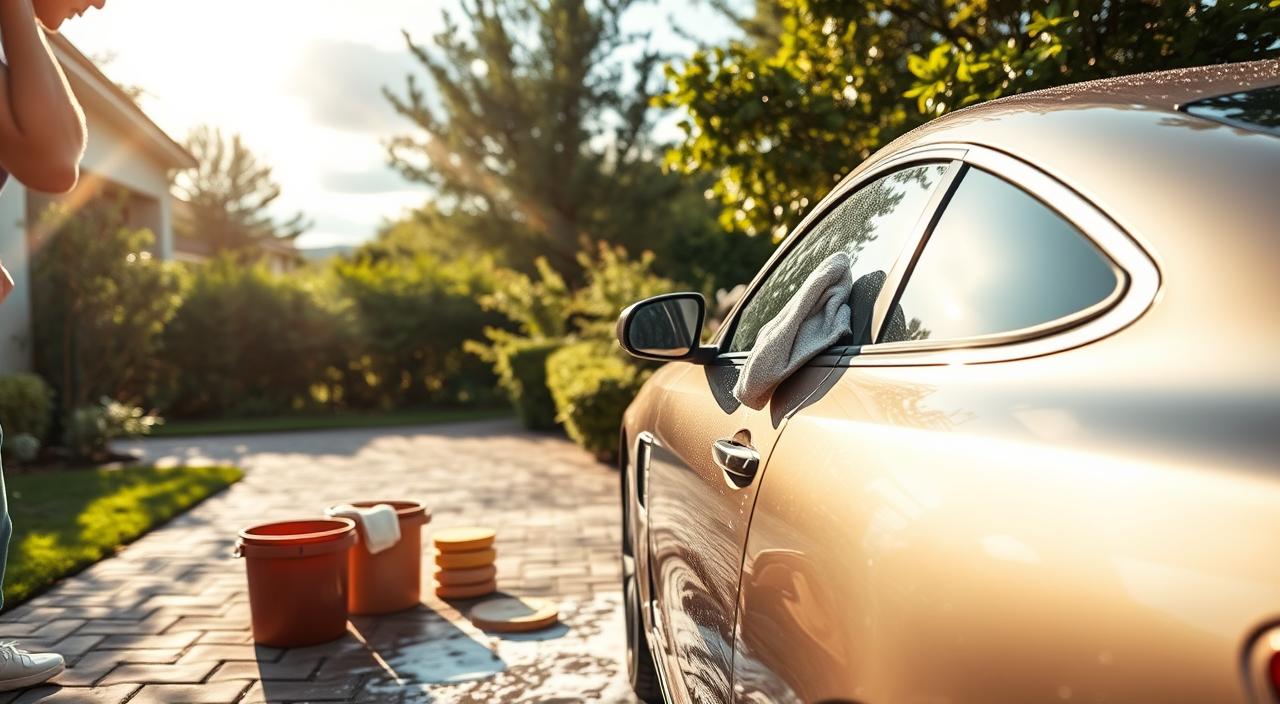
Are you tired of wasting water while keeping your vehicle clean? Eco-friendly car washing is now easier than ever with a waterless car cleaning method. This approach not only conserves water but also provides a convenient way to clean your car at home.
With car cleaning at home becoming more popular, you can achieve a showroom shine without the need for a hose or a trip to the car wash. Our step-by-step guide will walk you through the simple process. This ensures your vehicle looks its best while supporting an environmentally friendly practice.
By following this guide, you’ll learn how to effectively clean your car using a waterless method. This saves time and resources. Get ready to experience the benefits of a cleaner car and a clearer conscience.
What Is Waterless Car Cleaning?
Cleaning your car without water is not only possible but also highly effective. Waterless car cleaning uses special products that trap dirt. This lets you clean your car without water. It’s becoming popular because it’s easy and eco-friendly.
The Science Behind Waterless Cleaning Products
Waterless cleaning products mix surfactants, lubricants, and solvents. These ingredients work together to lift and remove dirt. Surfactants break down dirt, and lubricants help remove it without scratching.
These products are made to be gentle on your car’s paint and clear coat. They’re safe for regular use. Understanding how they work shows the tech behind eco-friendly car washing.
Environmental Benefits of Going Waterless
Waterless car cleaning has big environmental benefits. Traditional car washing uses a lot of water, wasting it and polluting. Waterless car cleaning uses no water, saving water and reducing pollution.
Choosing waterless car cleaning helps conserve water. It’s great for areas where water is scarce. It’s a smart choice for car owners who care about the environment.
Benefits of Waterless Car Cleaning
Switching to waterless car cleaning offers many benefits. It’s good for the environment and saves you money and time.
Water Conservation and Environmental Impact
Waterless car cleaning saves a lot of water. Traditional car washing uses a lot of water. By using waterless cleaning products, you save water and help the environment.
Time and Convenience Advantages
Waterless car cleaning saves time. You don’t need to set up equipment or wait for the right weather. It’s perfect for people who are always busy but want a clean car.
Cost Comparison with Traditional Washing
Waterless car cleaning is also cheaper in the long run. The initial cost of waterless cleaning products is higher. But, you save money on water bills and don’t need to wash your car as often.
| Method | Water Usage | Cost | Time |
|---|---|---|---|
| Traditional Washing | High | High | High |
| Waterless Cleaning | Low | Low | Low |
Choosing waterless car cleaning helps the environment. It also saves you money and time.
When to Use (and Not Use) Waterless Car Cleaning
Not every situation is right for waterless car cleaning. It’s important to know when it works best. Waterless cleaning is great for keeping your car looking good, but you need to know when to use it and when to stick with traditional washing.
Ideal Conditions for Waterless Washing
Waterless car cleaning works best in certain situations. It’s best for cars that aren’t too dirty and when it’s shaded or cloudy outside. Direct sunlight can make the product dry too fast, leaving streaks or residue.
- Avoid using waterless cleaning on extremely dirty cars.
- Opt for shaded areas or cloudy days.
- Ensure the car’s surface is cool to the touch.
Also, the temperature should be mild. Not too hot or too cold. Extreme temperatures can mess with how well the product works and how long it takes to dry.
When Traditional Washing Is Necessary
There are times when you should wash your car with water instead. If your car is really dirty, covered in mud, or has tar or bug splatter, water washing is better. These tough stains can’t be removed with just waterless products and might need water and special cleaners.
Scenarios where traditional washing is preferred include:
- After long road trips where the car has accumulated a lot of dirt and debris.
- If the car has been exposed to harsh environmental conditions like heavy rain or snow.
- In cases where the car’s surface has stubborn stains or contaminants.
Knowing when to choose waterless cleaning and when to go for traditional washing will help keep your car in top shape.
Essential Supplies for Waterless Car Cleaning
Getting the right tools is key for waterless car cleaning. You’ll need a few important items to clean your car well and efficiently.
Top Waterless Cleaning Products on the Market
You’ll first need a top-notch waterless cleaning product. These products clean your car’s surface without scratching or leaving residue. Here are some top picks:
- ONR (Optimum No Rinse): A favorite among detailers, known for its effectiveness and safety on various surfaces.
- Waterless Car Wash by Meguiar’s: A convenient and easy-to-use product for quick cleanups.
- Detailing Solutions Waterless Wash: Offers a gentle yet effective cleaning formula that is safe for most car finishes.
When picking a waterless cleaning product, make sure it’s pH-balanced and safe for your car’s paint type.
Microfiber Towels and Additional Tools
You’ll also need the right tools to apply and wipe away the cleaner. Microfiber towels are essential for waterless car cleaning.
- Opt for towels with a high GSM (grams per square meter) for better absorbency.
- Choose towels with a soft, plush pile to prevent scratching your car’s surface.
- Consider using different towels for different tasks, such as one for applying cleaner and another for wiping down surfaces.
Other useful tools include a detailing brush for tight spaces and a separate microfiber cloth for drying and polishing.
Preparing Your Car for Waterless Cleaning
Before you start cleaning your car without water, it’s key to prepare the surface. This ensures an effective cleaning process. It’s important for a showroom shine and keeping your vehicle looking great.
Inspecting Your Vehicle’s Surface for Heavy Soiling
Start by checking your car’s surface for heavy soiling or debris. Look for areas with stubborn dirt, bug splatter, or tar, as these may need extra care. Check the paint, windows, and wheels for any grime or staining. This first check will guide you on the best waterless cleaning method.
Setting Up Your Work Area for Efficiency
Then, set up your work area for the best results. Choose a shaded area or clean when the sun isn’t directly on your car. Gather all necessary supplies within easy reach, including your waterless cleaning product, microfiber towels, and any extra tools. This prep will make your cleaning faster and more thorough.
Waterless Car Cleaning Guide: Step-by-Step at Home
Now that you have the right supplies, it’s time to start cleaning your car at home. This method is good for the environment and saves water. Cleaning your car in steps makes it easier and more effective.
Dividing Your Car into Manageable Sections
To clean your car well, split it into parts like the hood, roof, trunk, and sides. This way, you won’t miss any spots. Start with one section at a time to stay organized.
Proper Spray and Wipe Technique
The spray and wipe technique is key in waterless car cleaning. Spray a little cleaning product on a microfiber towel or directly on the car. Then, wipe in straight lines from top to bottom. This method helps avoid scratches by not dragging dirt.
Folding and Rotating Microfiber Towels for Maximum Effectiveness
To get the most out of your microfiber towels, learn how to fold and rotate them. Fold your microfiber towel into quarters to use both sides. When one side gets dirty, flip it to a clean side. This way, your towels last longer and clean better.
By following these steps and techniques, you can make your car shine without using water. Remember, it might take a few tries to get it right. So, don’t get discouraged.
Cleaning Different Car Surfaces
Your car has many surfaces, like body panels, glass, and wheels. Each needs its own cleaning method. Knowing what each surface needs helps keep your car looking good and lasting longer.
Body Panels and Painted Surfaces
For body panels and paint, use a soft waterless cleaner. Put the cleaner on a microfiber towel, not directly on the car. This prevents too much cleaner from getting on the paint. Wipe the surface gently, in sections, to cover it evenly.
Glass, Windows, and Mirrors
Use a glass cleaner or a waterless product that’s safe for tinted windows on glass. Don’t use paper towels or rough materials that can scratch. Instead, use a microfiber cloth for a clean finish.
Wheels, Tires, and Trim
Wheels, tires, and trim need special cleaners to remove dirt without harm. Use a wheel cleaner made just for this to get rid of brake dust. For tires, a dressing makes them look better and protects them from cracking. Trim and moldings can be cleaned with mild soap or a trim cleaner, then a protectant to keep them looking good.
By cleaning each part of your car the right way, you keep it looking great and its parts safe.
Dealing with Stubborn Dirt and Stains
Waterless car cleaning can be tough, especially with stubborn dirt and stains. These spots are hard to get rid of but the right tools and products can help. You can clean your car without harming its surfaces.
Removing Bird Droppings and Tree Sap
Bird droppings and tree sap are common stains. Bird droppings removal is key because they can harm your car’s paint. Use a special cleaner to break down bird droppings’ uric acid.
For tree sap, a gentle adhesive remover or a sap removal product works well. They dissolve the sap without hurting the paint.
| Stubborn Stain | Recommended Product | Technique |
|---|---|---|
| Bird Droppings | Specialized bird dropping remover | Gently wipe with a microfiber cloth |
| Tree Sap | Adhesive remover or tree sap remover | Dampen the area, then wipe clean |
Tackling Bug Splatter and Road Tar
Bug splatter and road tar are hard to remove but doable. For bug splatter removal, use a product made for bug remains. Road tar needs a solvent-based cleaner that’s safe for your car’s paint.
Always test a small area first to avoid damage. With the right products and techniques, you can keep your car clean and shiny with waterless cleaning.
Finishing Touches and Detailing
After you’ve waterless cleaned your car, it’s time for the final touches. These steps make your car look new and protect it from the weather.
Adding Protection with Spray Wax or Sealant
Using spray wax or sealant adds a protective layer to your car’s paint. These products make water run off, preventing spots and making cleaning easier. Look for products with polymers or silicones for the best protection.
To apply, spray the product on a microfiber towel and wipe it across your car. Always follow the product’s instructions for the best results. Some top picks include:
- Chemical Guys Spray Wax
- Meguiar’s Hybrid Ceramic Wax
- Gtechniq Crystal Serum Ultra
| Product | Key Features | Price Range |
|---|---|---|
| Chemical Guys Spray Wax | Easy to apply, hydrophobic properties | $15-$25 |
| Meguiar’s Hybrid Ceramic Wax | Ceramic-infused, durable protection | $20-$30 |
| Gtechniq Crystal Serum Ultra | High-quality, long-lasting protection | $40-$60 |
Quick Interior Waterless Cleaning Methods
Don’t forget about the interior. Quick cleaning methods can make a big difference. Start by dusting surfaces like the dashboard with a microfiber cloth. For tough stains, use a gentle cleaning product made for car interiors.
For the best results, mix microfiber towels with gentle cleaning products. This keeps your car’s interior clean without damaging it. Some good products include:
- Microfiber cloths
- Armor All Interior Cleaner
- Chemical Guys Fabric Cleaner
By following these steps, you’ll give your car a complete clean. It will look great and stay protected for a long time.
Troubleshooting Common Issues
Even with the best efforts, you might still face some problems with waterless car cleaning. Many of these issues have easy fixes. You just need the right techniques and a bit of knowledge.
Dealing with Streaking and Smearing
Streaking usually happens when you use too much product or don’t wipe right. Use a microfiber towel and clean in small parts. Make sure to wipe off any extra product before it dries. If streaks keep coming back, try using less product or a different brand.
Addressing Water Spots and Residue
Water spots can be annoying, especially with waterless products. To get rid of them, use a clean microfiber towel with a little water. Rub the spot in a circle until it goes away. For tough spots, you might need a special remover.
Fixing Scratches and Swirl Marks
Scratches and swirl marks can happen if you’re too rough or use the wrong stuff. Always use a soft, clean microfiber towel and move in circles. For scratches or swirl marks, try a polish or get professional help.
Knowing how to fix these common problems means you can keep your car clean and shiny without water. With regular care and the right methods, your car will always look great.
Conclusion
You now know all about waterless car cleaning. It’s good for the planet and makes your car look new. This method saves water and is easier than traditional washing.
The waterless car cleaning benefits are obvious. It’s easy, saves money, and is good for the environment. With the right tools and skills, your car stays looking great and helps the planet.
Using waterless car cleaning, you’ll see how simple and effective it is. Choosing eco-friendly car care like this is a small step that makes a big difference.
By following this guide, you’re on your way to a cleaner, shinier car. And you’re helping the planet at the same time.

Hi there! My name is Clara Martins, I’m from Oregon, and I write this blog with great care during my free time.