
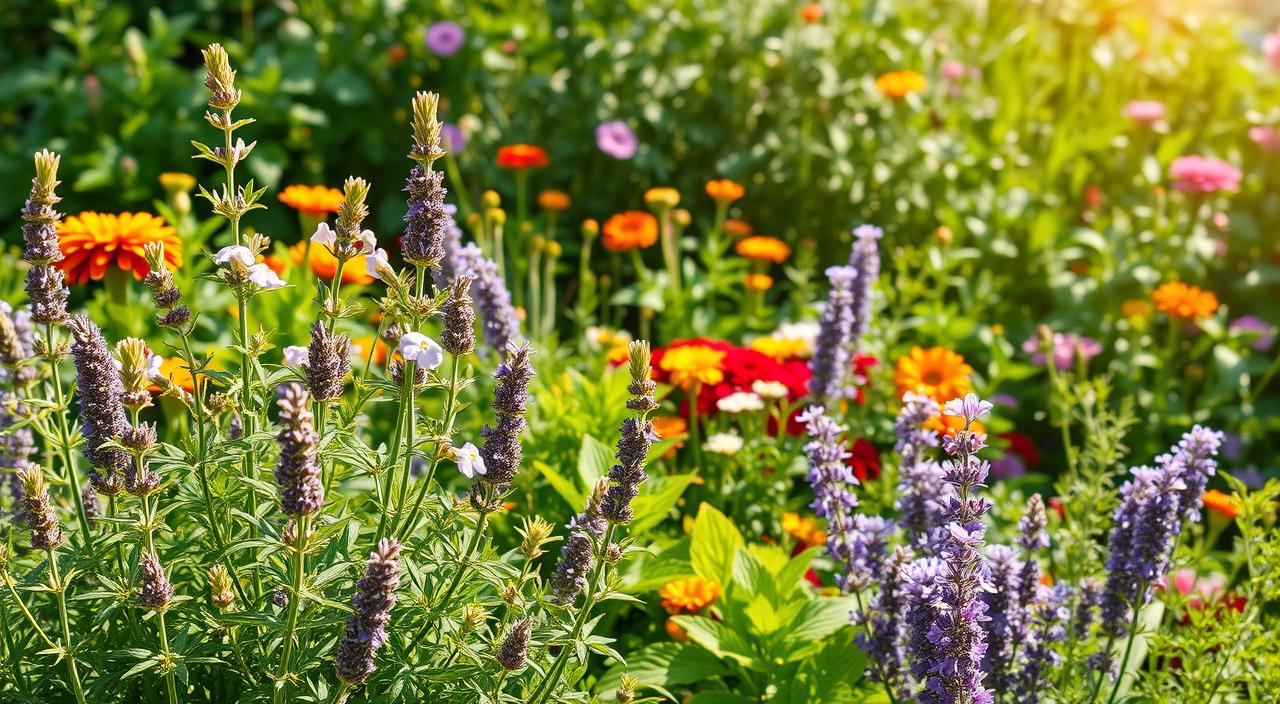
Keeping an organic garden free from insects can be tough. Harsh chemicals can harm both pests and your loved ones. Luckily, nature has given us natural insect repellents to use in our gardening tips.
These plants are a smart choice for organic gardening. They keep pests away and make your garden look great. By picking the right plants, you help your garden grow strong and healthy.
Let’s look at the best plants for a balanced garden. They offer a safe and green way to protect your garden.
The Problem with Garden Pests
Dealing with garden pests is a common challenge for gardeners. These pests can harm your plants, reducing their yield and beauty. It’s important to know which insects damage plants and the problems with chemical pesticides. This knowledge helps find better, eco-friendly ways to control pests.
Common Garden Insects That Damage Plants
Many garden insects can harm your plants. Aphids suck plant sap, while caterpillars eat leaves and flowers. Whiteflies and spider mites also damage plants by sucking their juices or spreading diseases.
| Insect | Damage Caused | Control Methods |
|---|---|---|
| Aphids | Feed on plant sap, causing curled or distorted leaves | Spray with water, use neem oil |
| Caterpillars | Eat through leaves and flowers | Hand-picking, Bt (Bacillus thuringiensis) |
| Whiteflies | Suck plant juices, spread diseases | Yellow sticky traps, insecticidal soap |
The Drawbacks of Chemical Pesticides
Chemical pesticides might seem like a quick solution. But they have big downsides. They can pollute the environment, harming soil and water. They also pose health risks to people and pets.
Moreover, these chemicals can kill good insects too. This disrupts the balance in nature and might even lead to more pests.
Benefits of Using Plants as Natural Insect Repellents
Using plants to keep insects away is great for gardeners. It makes your garden healthier and more eco-friendly.
Environmental Advantages
Using insect-repelling plants means less chemical pesticides. This is good for beneficial insects and keeps soil and water clean. It supports organic gardening and helps nature.
| Environmental Benefit | Description |
|---|---|
| Reduced Chemical Use | Minimizes the use of harmful chemical pesticides |
| Soil Conservation | Protects soil health by avoiding chemical contamination |
| Water Protection | Prevents water pollution by reducing chemical runoff |
Health Benefits for Your Family
Plant-based repellents are safer than commercial ones. They have harsh chemicals. Natural repellents keep your family safe and your garden pest-free.
Cost-Effectiveness Compared to Commercial Products
Growing your own insect-repelling plants saves money. These plants are easy to care for. They offer a lasting solution to pests.
Choosing plant-based repellents and organic gardening makes your garden better. It’s good for your family and the planet.
How Plants Repel Insects Naturally
Plants have special ways to fight off insects. Knowing these natural methods can help protect your garden. By using certain plants, you can make your garden less welcoming to pests.
The Science Behind Plant-Based Repellents
Plants make chemicals to keep insects away, like essential oils. These chemicals can spread through the air or soil. This creates a barrier that keeps pests out.
For example, some plants release VOCs. These confuse or scare away insects. This stops them from finding their usual food plants.
Essential Oils and Compounds in Repellent Plants
Many plants have essential oils that insects don’t like. Citronella oil and lemongrass oil are good examples. Other compounds, like pyrethroids and neem oil, also keep pests away.
By knowing which plants have these oils, you can pick the best ones for your garden. This helps control pests without using harmful chemicals.
Using plant-based repellents is a safe and smart way to keep pests away. Adding these plants to your garden makes it safer for your family and pets. It also reduces the need for harmful chemicals.
5 Plants That Keep Insects Away from Your Garden Naturally
Turn your garden into a bug-free paradise with these five amazing plants. Adding these natural bug repellents to your garden cuts down on chemical pesticides. It also makes your garden a healthier place for your plants to grow.
Overview of Our Top Picks
Our top picks are Lavender, Marigolds, Basil, Rosemary, and Mint. These plants are great at keeping bugs away and are easy to care for. Here’s a quick look at each:
- Lavender: Known for its calming scent, lavender repels moths, flies, and mosquitoes.
- Marigolds: These bright flowers deter nematodes, whiteflies, and aphids.
- Basil: A popular herb that repels flies and mosquitoes.
- Rosemary: This fragrant herb protects against cabbage moths and bean beetles.
- Mint: Minty freshness keeps ants and aphids at bay.
You can use these plants in many ways to protect your garden. They can be planted directly in the ground, in pots, or as companion plants.
What Makes These Plants Effective
The power of these plants comes from their special properties and compounds. Lavender has linalool, which bugs don’t like. Marigolds have pyrethrum, a natural bug killer. Basil and rosemary have camphor and borneol, which also keep bugs away.
Here’s a table that shows the key compounds and the bugs they keep away:
| Plant | Key Compound | Insects Repelled |
|---|---|---|
| Lavender | Linalool | Moths, Flies, Mosquitoes |
| Marigolds | Pyrethrum | Nematodes, Whiteflies, Aphids |
| Basil | Camphor | Flies, Mosquitoes |
| Rosemary | Borneol | Cabbage Moths, Bean Beetles |
| Mint | Menthol | Ants, Aphids |
Lavender: The Versatile Pest Deterrent
Lavender is a well-known herb for its calming scent. It’s also great at keeping pests away from your garden. For centuries, people have used lavender in perfumes and potpourri. Its ability to repel insects makes it a must-have in any garden.
Insects Repelled by Lavender
Lavender keeps many insects away, including mosquitoes, moths, and flies. Its strong scent confuses these pests, making it hard for them to find their way. Adding lavender to your garden can greatly reduce pest problems.
- Mosquitoes
- Moths
- Flies
Growing and Care Tips
To enjoy lavender’s benefits, you need to grow and care for it right. It loves well-drained soil and full sun, ideal for dry spots in your garden. Water it carefully to avoid root rot. Regular pruning keeps your lavender healthy and bushy.
Best Placement in Your Garden
Where you place lavender is key to its effectiveness. Put it near areas where pests are common, like vegetable gardens or outdoor seating. Planting it with other pest-repelling plants creates a strong defense against pests.
Marigolds: The Colorful Insect Barrier
Marigolds add color to your garden and keep insects away. They are simple to grow and don’t need much care. This makes them perfect for those who want to avoid chemical pesticides.
Pests That Hate Marigolds
Marigolds keep pests like nematodes, whiteflies, and aphids at bay. Their strong smell is not appealing to these insects. This helps protect your other plants from harm.
Varieties and Growing Instructions
There are many marigold types, like French and African marigolds. To grow them well, use well-draining soil and full sun. They can handle some drought but grow better with regular water.
Start marigolds indoors or directly in the garden after the frost is gone.
Strategic Planting Techniques
Plant marigolds around your garden’s edge or mix them with other plants. Planting marigolds around the border can help deter pests from entering your garden. Mixing them with other plants boosts their repellent power.
Marigolds are great for a vibrant, pest-free garden. They’re easy to care for and naturally keep pests away. They’re a fantastic choice for any garden.
Basil, Rosemary, and Mint: Aromatic Defenders
Certain herbs can keep insects away from your garden. Basil, rosemary, and mint are great examples. They add flavor to your food and keep pests away. By adding these herbs, you can make your garden smell good and keep it pest-free.
Basil: The Mosquito and Fly Repellent
Basil is great at keeping mosquitoes and flies away. Its strong smell confuses and keeps these insects from coming near. Plant basil in places where you like to hang out outside, like patios.
Tips for using basil as a repellent:
- Plant basil in well-draining soil and full sun.
- Pinch off flower buds to encourage leaf growth.
- Use basil leaves in cooking to release their fragrance.
Rosemary: Protection Against Cabbage Moths and Bean Beetles
Rosemary keeps cabbage moths and bean beetles away. Its smell is not appealing to these pests. Plus, rosemary is easy to grow and doesn’t need much care.
Benefits of rosemary:
- Repels cabbage moths and bean beetles.
- Easy to grow and maintain.
- Adds fragrance to your garden.
Mint: Keeping Ants and Aphids at Bay
Mint keeps ants and aphids away with its strong scent. But, mint can spread fast and take over your garden. So, be careful where you plant it.
Tips for using mint effectively:
- Contain mint in pots to prevent spreading.
- Prune mint regularly to encourage new growth.
- Use mint leaves in teas or as a garnish.
Creating a Complete Garden Defense System
To keep your garden safe, mix smart plant placement with companion planting. Use plants that keep insects away. This way, your garden stays healthy and balanced.
Strategic Plant Placement for Maximum Protection
Planting insect-repelling plants wisely is key. Place them around your garden’s edges to block pests. For example, lavender or marigolds can keep pests out of your crops.
Think about each plant’s needs for space and growth. Good spacing helps plants breathe and prevents disease.
Companion Planting Techniques
Companion planting pairs plants for better growth and pest defense. Basil with tomatoes boosts flavor and keeps pests away. Mint can keep ants and aphids off when near other veggies.
Here are some great pairs:
| Main Crop | Companion Plant | Benefit |
|---|---|---|
| Tomatoes | Basil | Improves flavor and repels pests |
| Vegetables | Mint | Repels ants and aphids |
| Cabbage | Rosemary | Repels cabbage moths |
Seasonal Considerations for Year-Round Protection
Keep your garden pest-free all year by adjusting for seasons. In cold months, some plants may not work. Choose hardy ones that stay effective.
Follow these gardening tips and use insect-repelling plants. You’ll have a strong organic gardening system that naturally keeps pests away.
Troubleshooting Your Natural Pest Control
Natural insect repellents can be very effective. But sometimes, they might not keep pests away completely. This can happen even when you use them as directed.
When Natural Repellents Aren’t Enough
There are a few reasons why natural repellents might not work. Pest pressure could be too strong. Or, the repellents might not be right for the pests you’re facing. It’s important to know the pest type and adjust your plan.
Complementary Natural Pest Control Methods
There are other ways to fight pests besides repellents. You can bring in beneficial insects or use barriers to block pests. Keeping your garden clean also helps.
Conclusion
Adding the right plants to your garden makes it sustainable and eco-friendly. Plants like lavender, marigolds, basil, rosemary, and mint repel pests. They also add beauty and fragrance to your outdoor area.
Think about your gardening strategy when using these plants. Companion planting and strategic placement can boost their effectiveness. These organic practices protect your plants and help the environment.
Start using these natural repellents and gardening tips to create a pest-free garden. Enjoy the journey of caring for your outdoor space. You’ll have a beautiful and sustainable garden to enjoy.

Hi there! My name is Clara Martins, I’m from Oregon, and I write this blog with great care during my free time.